
Warren County Deed Records and Instruments
The Warren County Circuit Court Clerk is the official custodian of land records. A deed records one conveyance, naming the grantor, the grantee, and a legal description of the land. Related filings matter too. The Clerk's holdings also include deeds of trust, rights-of-way, judgments, financing statements, and termination statements. A deed shows who granted and who received. One instrument alone never proves earlier claims were cleared.
| Deed Type | What It Does | Common Use |
|---|---|---|
| Deed | Recorded transfer and legal description | Owner chain and conveyance review |
| Deed of trust | Security instrument connected to a loan | Review with any later release |
| Right-of-way or easement | Recorded access or use interest | Check effect on the described tract |
| Judgment | Court-related claim in the clerk’s record groups | Search parties and later satisfaction |
| Financing statement | Recorded filing or termination entry | Distinguish from a deed conveyance |
A deed conveys the interest described in it. A deed of trust, by contrast, secures an obligation. An easement or right-of-way can limit how land is used or reached. It does not change the owner of record. A release or termination is a separate recorded event. It must be found, not presumed from a later sale. The legal description controls what an instrument covers, not a map outline.
Warren County’s Recorded Land Record Span
Warren County traces its land records from 1836 to the present. That span reaches from handwritten deed books to modern filings. Not every image is open to an unauthenticated visitor. The Clerk digitizes permanent records on a continuing basis. Microfilm copies are preserved at the Library of Virginia.
The age of a chain matters. Descriptions written generations ago may use acreage, compass calls, neighboring tracts, or an old subdivision name. They may not use a street number at all. Front Royal also grew through annexations in 1921, 1949, 1976, and 1978. A deed written when the parcel was rural county land can read very differently. Current mailing and zoning records may not match it.
Warren's land-record notice spells out county coverage and subscriber requirements. Save the index details. They let an office visit or a remote request target the correct instrument.
Warren County Index and Image Access
Virginia Secure Remote Access splits index lookup from image viewing. Some clerks allow free index-only access. Document images are different. They require an authorized subscriber, a signed agreement, and payment. Warren County's remote system asks for an Internet Access application and subscriber agreement, with the current fee confirmed by the county. At the courthouse, anyone may inspect records and plats.
An index result identifies parties and a recording reference, but the image still matters. It carries the legal description, exceptions, and referenced plats. A locked image is not a missing record.
The statewide Virginia SRA land-record portal anchors index work. Verify county subscriber rules first.
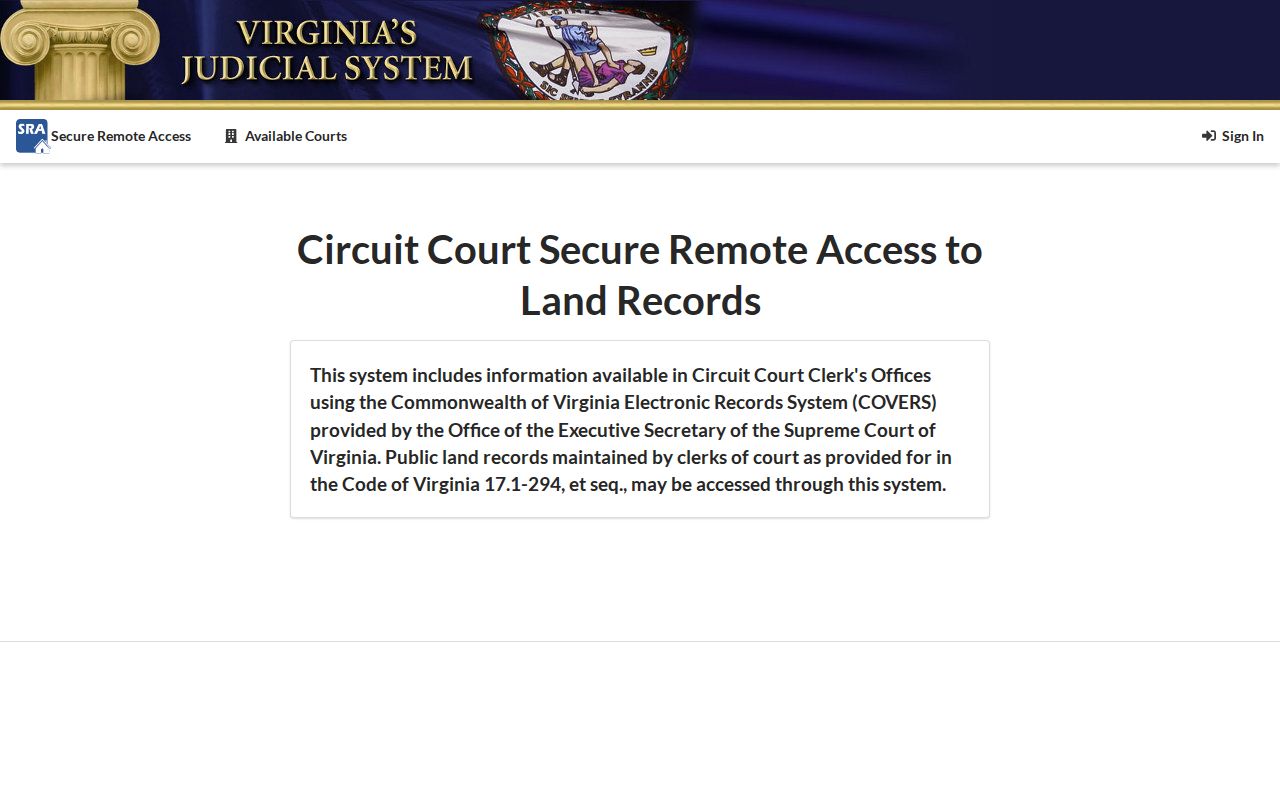
The statewide portal is the entry point. Warren's county page supplies the local limits on remote document images. The county's restricted-access instructions are the local companion to statewide index information.
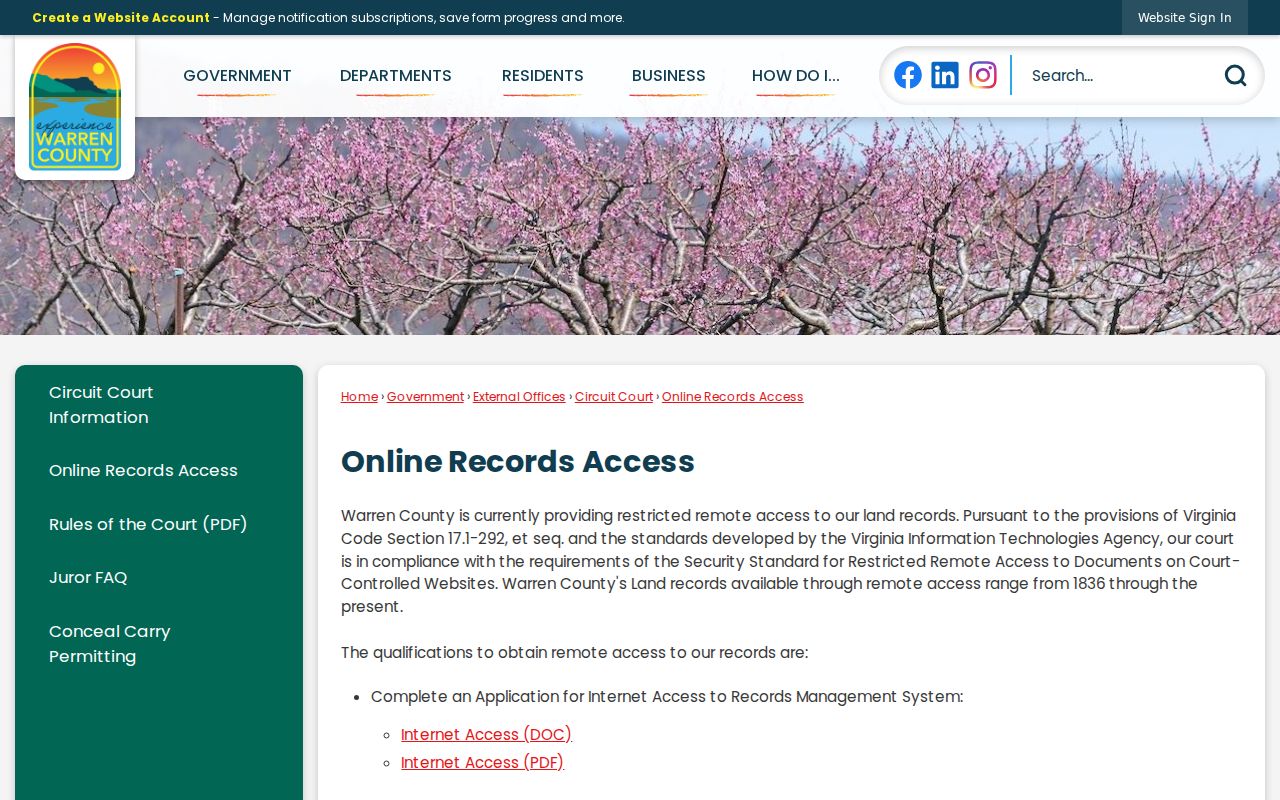
Read the image notice before choosing between a remote account and in-person inspection.
Warren County’s Grantor-Grantee Index
The land index runs on party names and document types, not street addresses. Start with the county GIS or assessment result. Note the owner and parcel key. Then search the party index. Run the current owner as grantee to surface the incoming deed, whose grantor becomes the next name to test. Repeat the loop, checking every step against the land description to build a chain that holds.
Names can vary. A trust, LLC, estate, trustee, or spouse may appear in a form far from the everyday owner name. Search initials, reasonable spelling variants, and fiduciary capacity. When a result appears, check the recording date, document type, grantor, grantee, and full legal description. A similarly named party is not a match. Nor is a deed for a different slice of a parent tract.
- Find the present owner and parcel key in the assessment or GIS record.
- Search the owner as grantee in the Clerk’s land index.
- Read the grantor, document date, type and legal description.
- Search the grantor as a prior grantee, repeating while descriptions match.
- Grantor
- The party conveying the described interest.
- Grantee
- The party receiving the described interest.
- Chain of title
- The sequence of instruments connecting past and present interests.
- Index reference
- The identifier supplied by the record system to retrieve an instrument.
Warren County Plats and Legal Descriptions
Every deed stands on its legal description. That language pins the transaction to one piece of Warren County land. It takes different forms. A subdivision lot may cite a plat, a lot number, or a subdivision name. Rural tracts lean on acreage, bearings, distances, or a parent parcel. The county GIS map helps you spot the parcel. But tax geometry never settles a boundary. Only the recorded description controls.
The Circuit Court Clerk keeps the land records and plats. The county GIS page sends researchers to the courthouse for full plat access. Planning and GIS archives may reveal a subdivision name or a map change. A reference map still is not a recorded plat. Lay the deed's dimensions and references beside the official drawing. Compare them line by line.
Warren County's lot-modification process adds two wrinkles. It requires tax verification. The approved plan must also be recorded within six months of approval. When a lot was recently adjusted, confirm the plan actually reached the courthouse. Then check that the current deed cites the same legal description the approval created.
Warren County’s 1977 Subdivision Check
Warren County's family-subdivision guidance asks applicants to trace the parent tract back to April 6, 1977. That date is a local dividing line. It marks the point for deciding whether a tract had already been split. The guidance also layers on an agricultural-zoning condition. It adds five years of fee-simple ownership, grantee-age criteria, and a minimum 20-foot private access easement.
Why should a deed researcher care? A family transfer often looks nothing like an ordinary sale. A brand-new lot can spring from a parent parcel. That parent parcel may carry a different description and a different owner of record. So search the older tract first. Compare the approved family plat, then follow the separate deed that conveys the created lot. The tax parcel and the legal lot may surface at different points in that sequence.
The county's family-subdivision page holds the operative local rules. Treat them as the answer to this one subdivision question. They are not a general title rule for every Warren property.
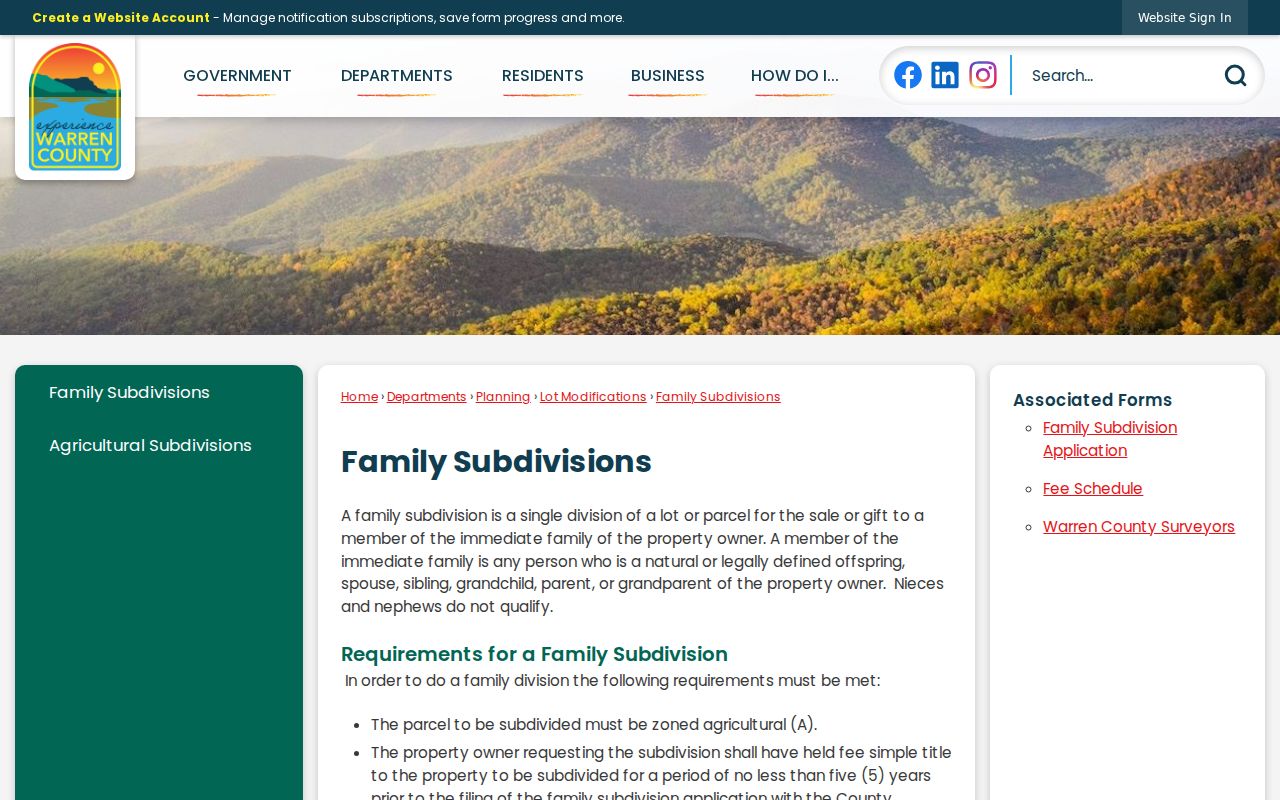
An old parent-tract search leads to a later recorded lot, which is why a solid deed chain should carry the plat right alongside every transfer in Warren County property records.
Warren County Releases, Liens and Estates
Deeds of trust, rights-of-way, judgments, financing statements, and termination statements all sit among the Clerk's record groups. A title trail should never stop at the newest deed. Search a lender or trustee for a deed-of-trust release. Chase a judgment satisfaction from the creditor. Look for a financing termination from the secured party. And remember that an easement can burden land long after ownership changes hands.
Probate shifts names in the index too. Warren Circuit Court holds wills and estate records. A personal representative may sign as grantor when estate property is sold, and the legal authority often lives outside the ordinary deed. Search the estate style and the fiduciary name, then read the filing and the deed together.
The Clerk will not run a title search for you. A complete review may span the deed chain, recorded releases, liens, easements, and probate authority. Check tax status separately through the Treasurer.
Preserving Warren County Deed History
The County Clerk describes continuous digital scanning. It runs alongside microfilm preservation of permanent records at the Library of Virginia. Each format does its own job. Digital scans make recent documents easier to reach. Microfilm serves as the archival copy built to last. So if a deed will not open online, that alone does not mean the county record is missing.
Keep your notes exact. Copy the grantor, grantee, instrument date, legal description, and any reference just as shown. Those details let staff pull the right volume or film image. They also let the next researcher follow the chain. For older Front Royal land, remember that annexation changed the area's municipal status. It never moved custody of the underlying county deed.
Where should you stop? Not at the oldest index hit you can reach. Stop at the earliest instrument that answers your ownership question. Test it against the tract description and the related recorded interests in Warren County deed records.
Obtaining a Warren County Deed Copy
Once an index entry hands you a recording reference, you can use the authorized image system. You can also visit the Clerk's counter to inspect the instrument. Confirm any current copy fee, certification charge, or mail-copy procedure with the Circuit Court Clerk. Do this before sending payment or planning a remote order. The office sits at 1 East Main Street in Front Royal and answers at 540-635-2435.
Give staff the party names, the instrument type, an approximate date, and any index reference you hold. A parcel ID helps connect a request to the right land. Older deeds may describe a tract differently. They may use acreage, boundary calls, a parent owner, or a former lot designation instead. Read past the first page. Exceptions, plat references, and the full legal description often appear later in the instrument.
The Virginia SRA portal and the county access notice explain the online route. Remote image access is restricted. The public may still inspect records and plats at the courthouse. The Clerk can show you how to use a terminal. It will not perform a title search or interpret what the chain legally means.
Recorded, not guaranteed. Warren County deed records show filed instruments, not a title opinion. An index hit does not confirm that all liens, releases, estate interests or boundary issues have been resolved.